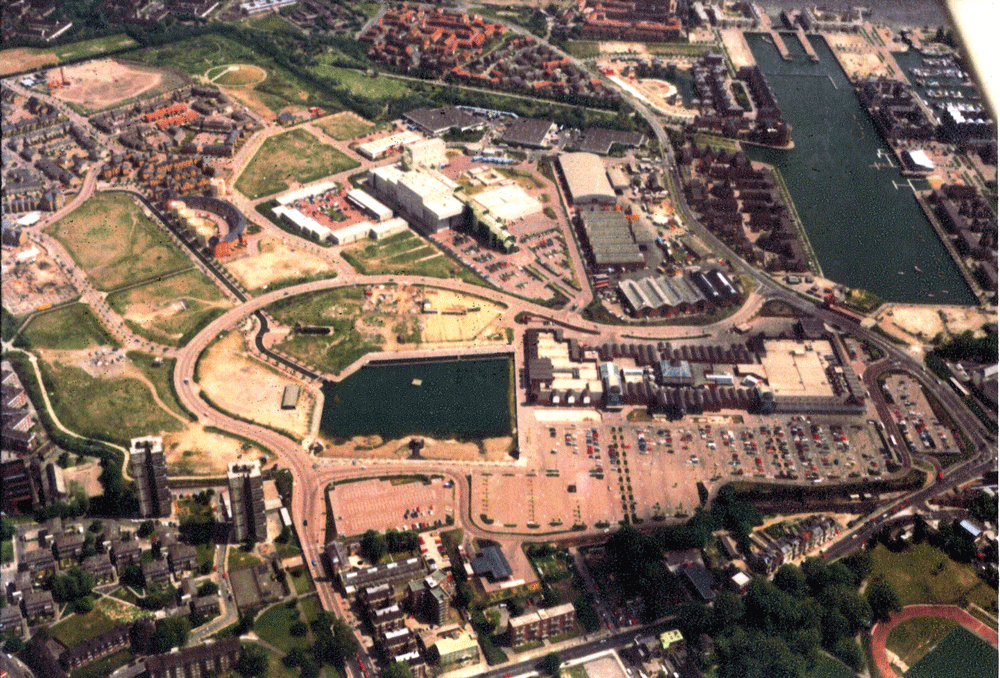
I joined the London Docklands development Corporation in 1987, initially on a temporary basis, and when my Line manager, Jenny Coe, left I took over her role as Area Landscape Architect for the Surrey Docks Peninsula, the area south of the Thames. Inherited from Jenny a splendid legacy of high quality landscape work and many exciting projects. one of these was Canada Water.
The Design of Canada Water
Canada Water is unique in London Docklands. It is a fresh water dock; all the others are brackish or salty from sea water coming in when the Thames is high. Canada Water is topped up by fresh water springs. It supports seven species of fresh water fish and the ecology in general is fresh water, not brackish.
However, the lining of Canada Water was damaged during the construction at the north-eastern end and the dock developed a leak.During our monthly consultations with the Surrey Docks Tenants and Residents we realised that it was a much valued amenity and there were several groups which had an interest in it. There was an angling group who regularly used the dock. There were groups interested in bird watching, in urban ecology, and there was a general appreciation of the importance of the amenity in a city centre.
Canada Water sits inside the viewing corridor from Greenwich to St Paul’s. This is a statutory viewing corridor which has to be preserved so that historic views enjoyed for centuries and recorded in many paintings would be kept clear for future generations. I had drawn this corridor on the masterplan base map to assist everyone when discussing development with developers. It meant that high rise development around Canada Waterwould never be allowed by Planning Authorities.
The Corporation had built a pipeline across the car park of the shopping centre (before it was built) to carry flood water from Surrey Quays station to Canada Water. This is connected to the four gargoyles on the southern edge. However London Transport removed their agreement to allow the water to be pumped into the Dock because of concerns about Weill’s disease. I did get medical advice from a physician at St Bartholomew’s that Weill’s disease would not present a health problem as it would be killed by ultraviolet light when it came out through the gargoyles. However, London Transport did not relent so another solution had to be developed.
The level of the dock was falling and all were concerned about the loss of habitat. I asked Thames Water if we could have a top up, but they gave a hollow laugh when they heard of the amount we required. We decided to bring water in from the Thames to bring the levels back up. I was concerned about the salt contact of this water and how it might damage the ecology. However, Cremer and Warner advised me that the main danger was the nitrates in the water coming from farms upstream. Agricultural activity ad sewage release into the river made it toxic for most life. Therefore they advised me to allow the top up only when the tide was coming in. Thus we would get brackish water which the wildlife could survive. The nitrates from the farms and sewage works would have removed the oxygen from the water and killed everything.
It was a huge relief when we opened the gates at Surrey Water and the water from the Thames flowed up the Albion Channel into the dock once more. It took a few days to complete the top up but it gave me time to find a more permanent solution.
Initially I considered the run off from the car park areas and any other areas that could be channeled into the dock. Cremer and Warner, our Ecological Consultants advised us against this option because of the high levels of pollution in this water. It was known that people changed their engine oil in their vehicles in these spaces, and that vehicles idled their engines. The run off had a high level of hydrocarbons within it and this would eventually destroy the unique ecology. In addition, this area of south London has a lower rainfall than parts of North Africa!
I approached Thames Water to ask if they could supply us, but the amount involved was too high. At one of the consultation meetings with local residents I learned from Elsie Marks about the numerous windmills that used to exist on the peninsula. They were used to extract water for the various paper making industries that used to exist there. Paper making uses large amounts of water. I read in London papers about the rising ground water levels in London which were a potential problem for the city.
The Jubilee Line were carrying out tests at the time, drilling boreholes across the route of the new line to determine the levels of ground water and the nature of the substrata. I contacted their Surveyors and asked if we could have copies of the results of their surveys. There were five boreholes around the Canada Water area. They readily agreed and it quickly became clear that there was plenty of potable water available, and that it lay in deep chalk which was relatively easy to drill through.
My next task was to interview various specialists who were involved in drilling and extracting water. There were those that worked in the North Sea and those working in Africa – a surprisingly large number of specialists were available and I shortlisted about fifteen companies and found out about their methods. One used a development of the Archimedes screw to bring water up. Another used a windpump to power an electric pump. I had seen the Archimedes screw used in Thamesmead to bring water over the flood defence to cap toxic land when I worked there in the Greater London Council.I asked the consultants both to produce feasibility studies to extract water from the ground water and deliver ti to Canada Water through the four gargoyles.
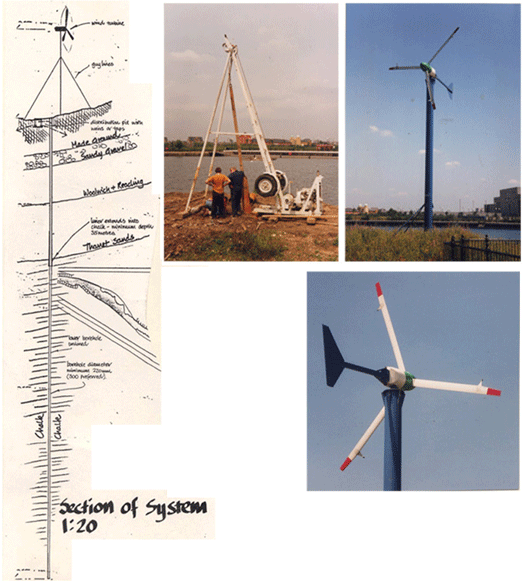
It soon became clear that this was the simplest, cheapest and most practicable way to keep the dock topped up. The process of drilling down eighty metres, inserting a steel pipe fro the top sixty metres, supplying and installing a wind pump and pumping the water up into the dock cost less than £200.000 and within three months it was up and running and the level of Canada Water returned to normal.
This was important to maintain the amenity of Albion Channel and Surrey Water too. Until the leak had become a problem, the weir between Canada Water and Albion Channel had been opened once a month to flush out the channel and keep it fresh. The fresh water flowed down the Albion Channel and into Surrey Water. From there it flowed over the weir into the Thames.
The water level in Canada Water was 3.5 OD. This was the Flood Defence level, and Albion Channel was also maintained near this level, as was Surrey Water. I was familiar with this system of levels as I had implemented two lengths of the riverside walkway at Thamesmead where we had a high level path above the flood level, and a low level path at the river edge. To get from one to the other it was necessary ascend to 3.5 metres and then down the other side.
Shortly after the wind pump was up and working we were able to start flushing through the Albion Channel once more to keep it fresh and clean.
Wildlife Habitat
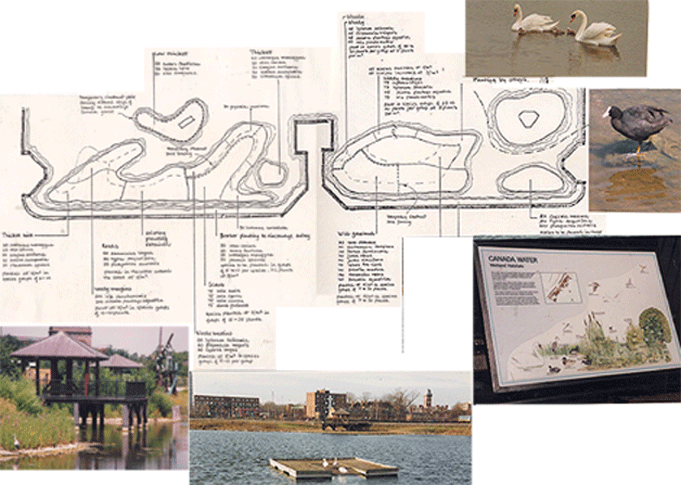
I designed two low level islands at the southern edge of the dock. These were to be partially submerged to allow waterfowl to nest there. There was a danger of nests being raided by both foxes and humans for the eggs, so it was important to separate the mammals from the area. Thus the viewing platforms were constructed at a higher level. No topsoil was used in the creation of the low islands, and they were kept separate from the surrounding paved areas by deep trenches to prevent access.
At the end of the project there were three files of information assembled which included all my correspondence during the four contracts; the reconstruction of the southern edge, the design and installation of the water pumping system, the design of the wildlife habitats, ad the construction of the viewing platforms and pavilion, and the Commissioning of Phil Bews’ magnificent sculpture of the Deal Porters. These files contained all the drawings and technical information for the project, and were necessary to run the project, and as part of the CDM Regulations to be handed to the Client at the end of the work.
This file included a maintenance schedule which listed in detail how the area had to be maintained. Specifically it would be necessary to remove any tree species or shrub species which became too large as these would lower the water levels and further damage the dock lining. In addition it would be necessary to clean out the boreholes from time to time to maintain the supply of the ground water.
Following the damage to the dock lining, the LDDC employed the services of Water Ecologists, Cremer and Warner, to monitor the water quality and to ensure that the unique system was not damaged. It supported fish and bird populations unlike any other dock.
My first job was to complete the design of the southern edge, that nearest to the Dockmanager’s Office, which had been largely done by my predecessor. The work involved building a dock edge along this side as the exiting one was exposed and damaged. it was made of steel sheet piles capped with a composite granite edging. Onto this were installed posts and railings. the walkway behind had cobble paving to match the existing character of the dock area.
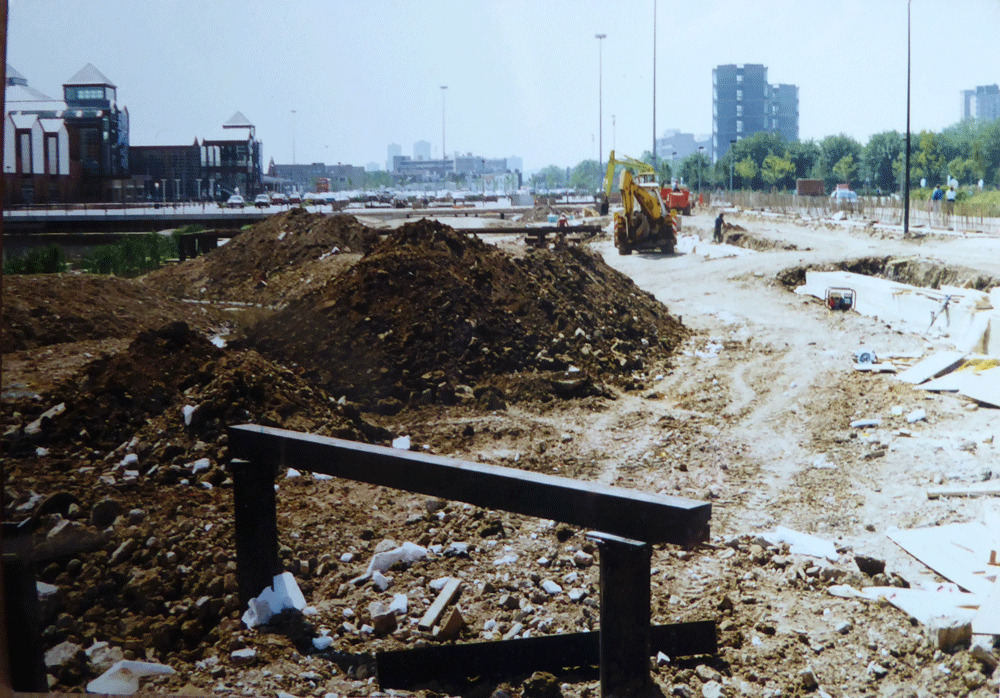
Selecting the composite granite edging was a careful task, and samples of various methods were made by the Contractor whom I had appointed for the work. Eventually we chose a finish which was almost indistinguishable from real granite. The cost of using real granite was prohibitive, and as it is a limited resource, we were keen to use a composite. Eventually the new edge was complete and it looked magnificent. it fitted in with the other three edges and had the character of the old docks. It transformed the appearance of the dock.
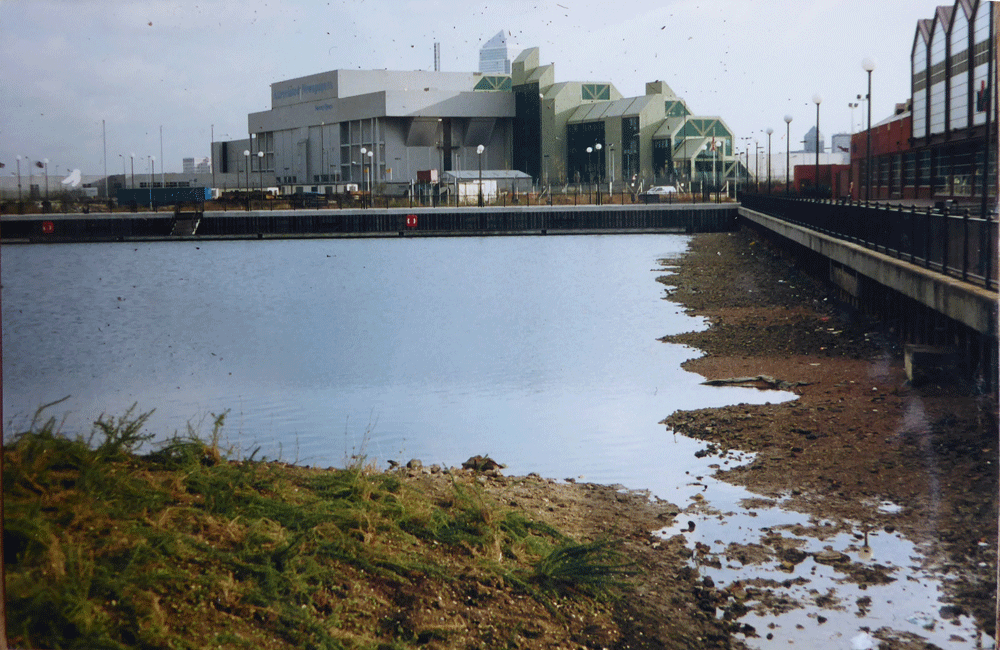
However, Canada water was still leaking, and it;s future was still in doubt unless this issue could be addressed. I was advised by the Director that if solution to the leak could not be found, it might be necessary to reconsider the function of the space occupied by Canada Water. There were several options, one of which was an extension to the car park to the Surrey Quays Shopping Centre on the Eastern edge. This would mean the end of this unique water ecology.
The LDDC had entered in to negotiations with London transport to take flood water from the tube tunnel which ran near the southern end of the dock. This water was a perennial problem for London Transport which had to pump it out on a regular basis. LDDC put a budget together of around £110,000 to install a pipeline across the car park from the tube station then called Surrey Quays, to the edge of Canada Water.
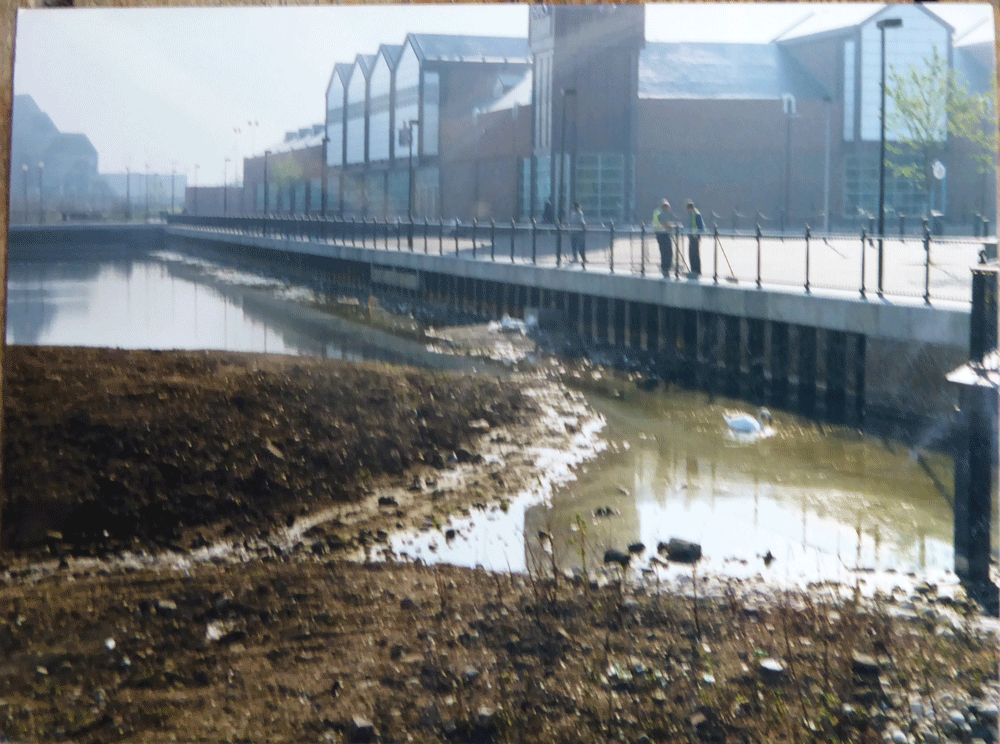
Next, I researched into the construction of windmills and found there were lots of designs. many of them had simple technology as they were best suited for rural areas in developing countries and needed to e easy to maintain. This was crucial as the site would eventually be handed over to the London borough of Southwark and they did not have huge amounts of money for maintenance. The technology had to be straightforward. Some designs used an archimedes screw, like the system I had seen used at Thamesmead to lift flood water used to cap contaminated sites back into the Thames, or to lift sewage or drainage water. However, it became clear talking to the system designers that the volume of water and speed of delivery would not be fast enough to raise the level of Canada water, without being a huge installation. I wanted something small and simple and easy to maintain which could deliver the water quantity we needed.
The Dock was now dangerously low and the fish were suffering and it was clear that if we did not take urgent action, the ecology would die anyway. I asked Cremer and Warner if we took water from the Thames, by opening the gates to Surrey Water and opening the gate along the Albion Channel, would it destroy the ecology? I naively assumed that if we did it when the tide was going out we would get relatively fresh water coming downstream and it would not damage the ecology. They confirmed we could take water from the Thames, but only when the tide was coming in, not going out, and only as a one-off. This was surprising. the reason was that the level of nitrates running off the farms upstream was so great that it depleted the water of oxygen killing all wildlife in its way. Whereas water coming from the sea might have a salt content, but it would be diluted, and as a one off supply, the ecology would quickly recover. I was able to put together an urgent project proposal for the necessary work to open up the gates from the Thames and let the water flow back up the system through the Albion Channel into Canada Water. It had to be carefully controlled to avoid the water spilling over the channel edges, as there was a lot of new housing development going on along the canal. The sytem worked perfectly, and Cremer and Warner continued to monitor the wildlife throughout to make sure it was not being adversely affected. When I saw the water levels starting to rise I was so relieved, and within a fortnight, it was back up to a respectable level. we had secured a temporary relief period.
Meanwhile, I had prepared a proposal for the drilling of a shaft on the island in Canada Water, it would be 80 metres long, with the first sixty metres lined with a steel tube. on top would be a windmill, which would generate electricity which would keep the pump at the bottom of the shaft pumping the water upwards into the dock. It could be retrieved easily via a cable so that it would be regularly cleaned and replaced whe necessary. It was straightforward.

The Windmill Designer and Engineer did splendid job of designing his system and installing it. on the day it started working he called me over from the Dockmanager’s office where I worked. He was perched on the edge of the borehole with two champagne glasses. He switched a button and a stream of milky water poured into the glasses.
“Cheers!” he said with a broad grin, handing me a glass and clinking the side. iIwas astonished to see him take a sip from the glass of the milky water.
“Is it safe?” I queried.
“Well, I’m still here,” he said with a laugh.
Within a couple of weeks the windmill was installed and whenever the wind blew it lifted ground water up 80 metres nto the dock, and it soon reached its maximum level. it then overflowed gently into the Albion Channel thus flushing the whole water system thrugh with fresh water. the future of Canada Water was secure! it would not become an over flow car park!
The final icing on the cake was the design and construction of the central boardwalk and pavilion, and the installation of the deal Porers Sculpture. Gibberd and partners helped to realise the design concept, whch was for a wildlife habitat. I had chosen native species to create a nesting area on teh island fr waterbirds. I hoped their nests would be safe from foxes and vandals there. the boardwalks were made from larch from a renewable source. I didn’t want to use tropical hardwoods, like iroko which is used on the balustrades along the tames, and which are a limited resource.
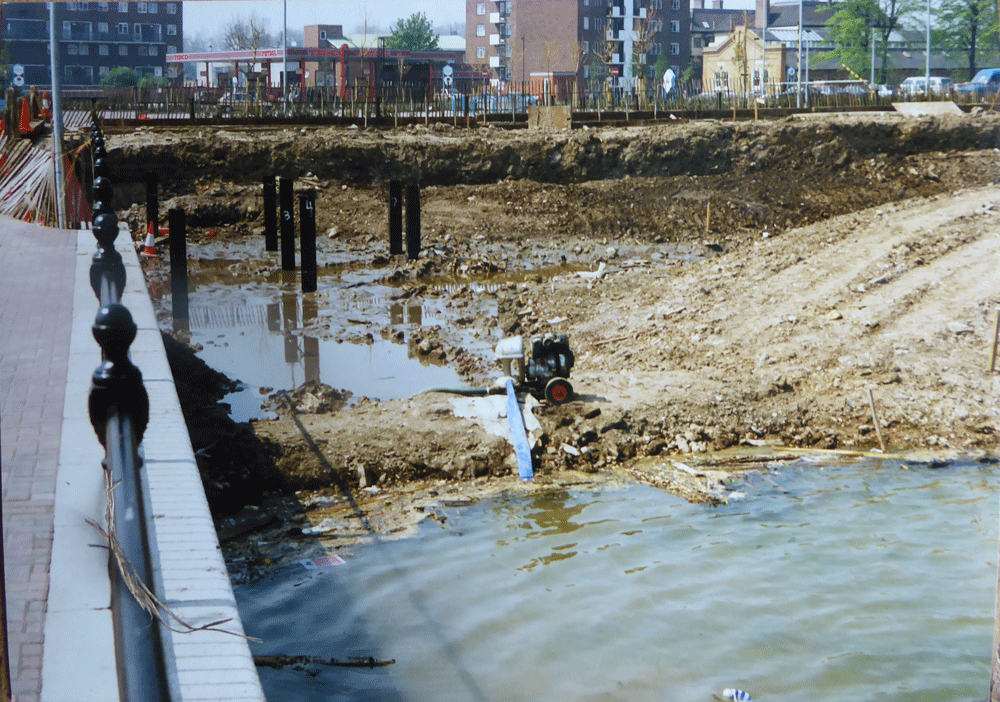
Sheet pile foundations go in for the boardwalk
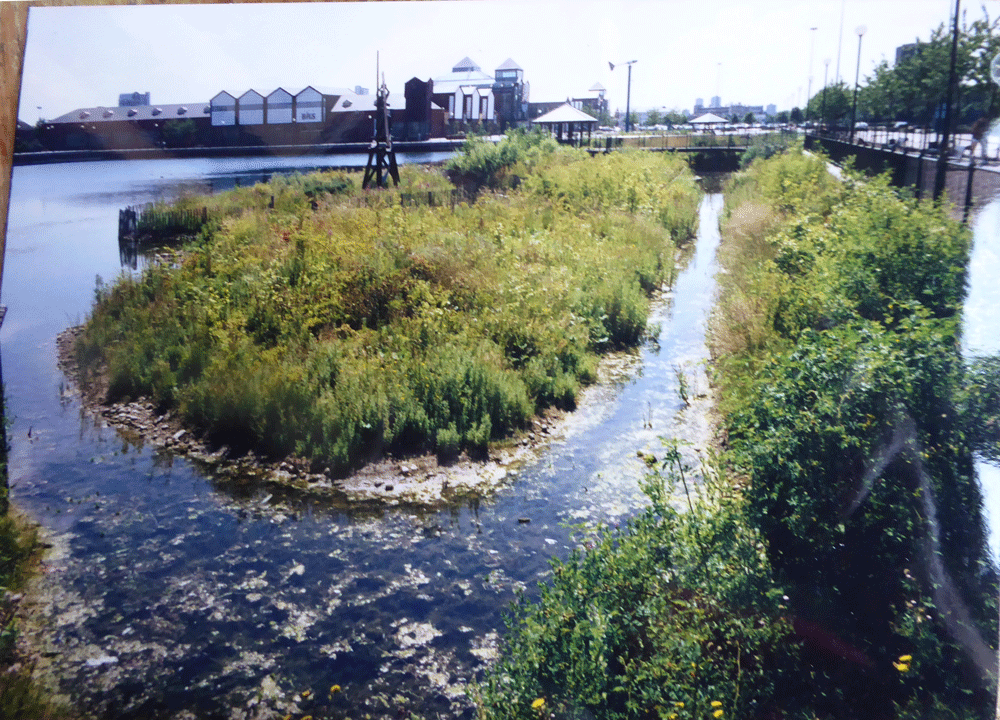
The creation of the wildfowl nesting islands with a protective moat. I used subsoil to keep fertility low, and native species.
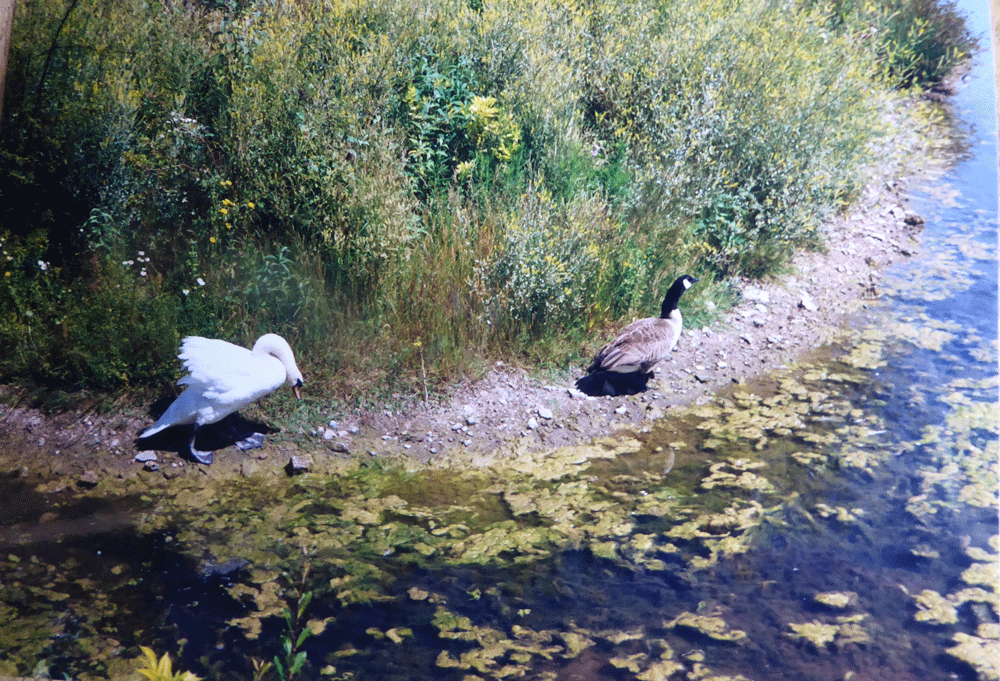
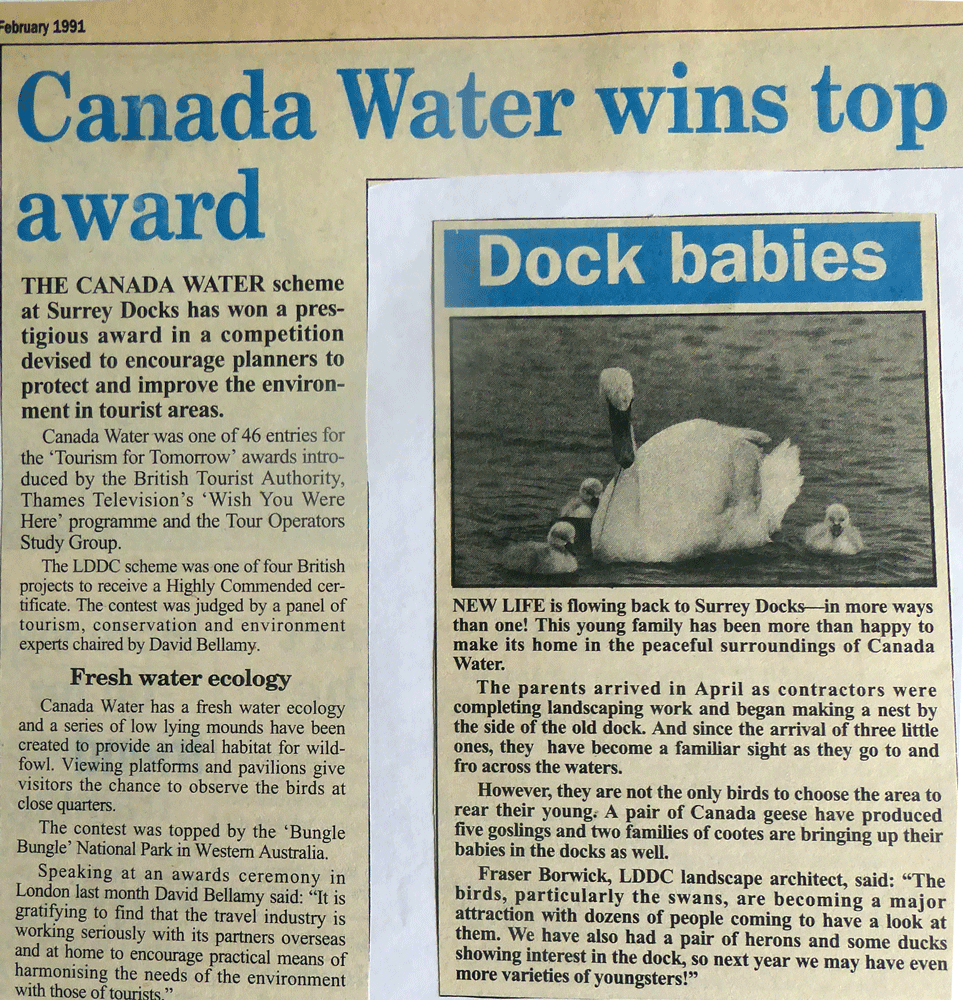
The swan starts nesting in the new habitat and sees of a nosey Canada goose
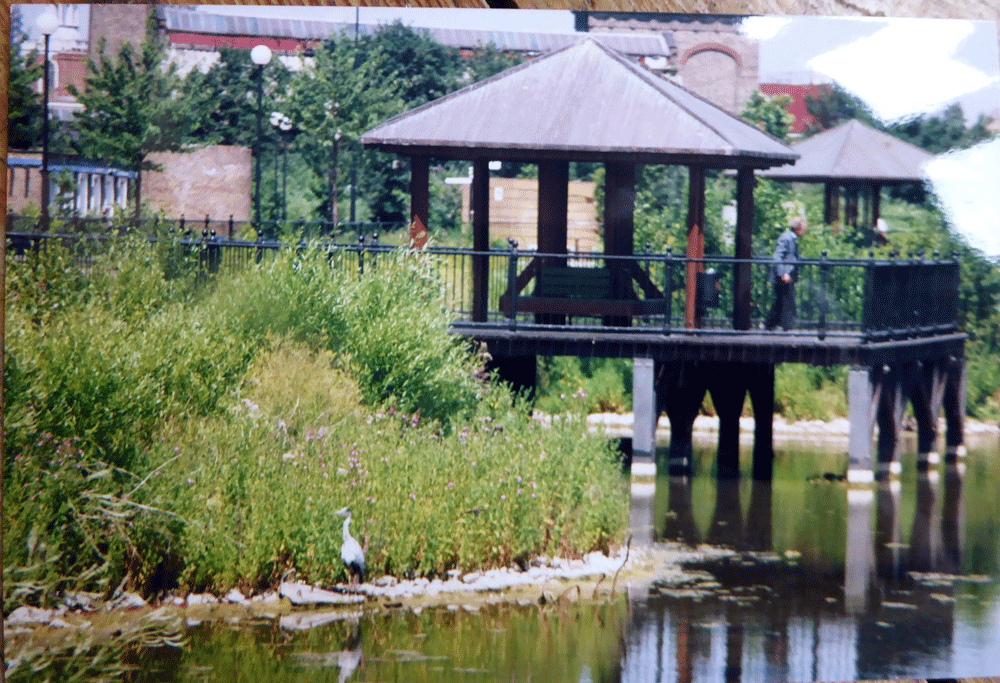
A heron carries out an inspection of the new island
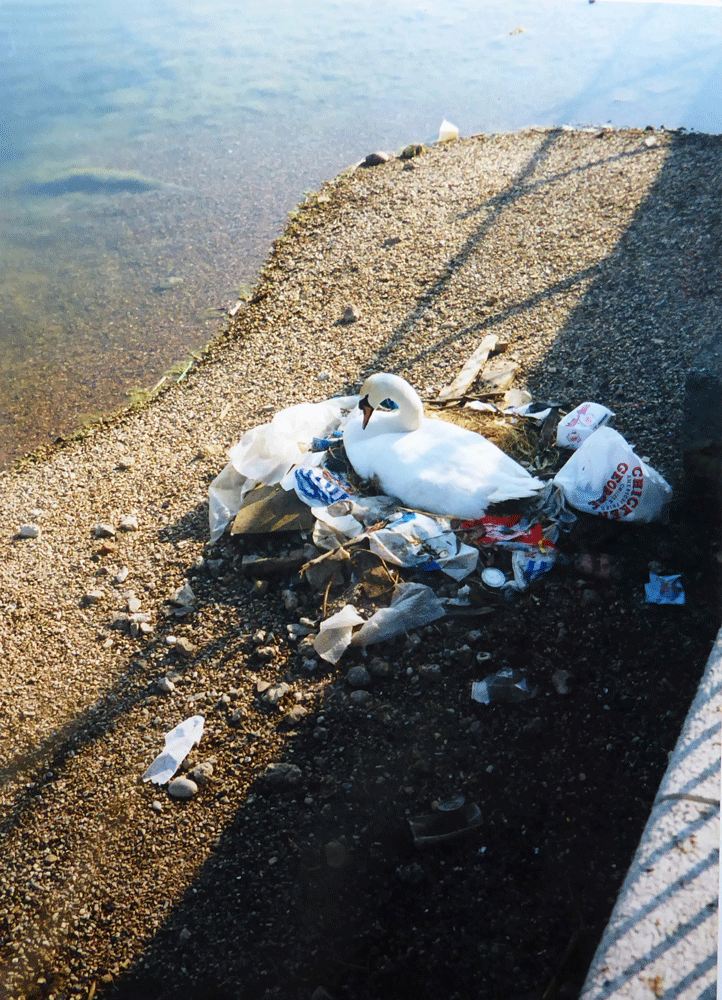
Amusingly, during the construction of the board walks the swans started nesting on the edge of the dock n a pile of rocks near the shopping centre. they were determined they were going to raise a family although their opportunity was limited. Fortunately, I had put a clause in the Contract that should the swans start nesting all work must stop at no cost to the Client until they were finished! So we had to stop and wait!
The Deal Porters sculpture by Phil Bews was one of five submissions I secured from a list of artists. I had prepared a brief asking for something which had local relevance, possibly historical, possibly humorous. This was very deliberate as I had had my ears filled with objections to the big anonemous Corporate installations which ad been placed in the area and which local people did not like. They liked the bust of James Walker by Michael Rizello at Greenland Dock, and they also liked the Bas relief of the Docks, also by Michael Rizello, which i had placed on the top of Stave Hill. They had already threatened to chuck William Pye’s piece at Greenland Dock into the Thames!
The artists chose were people whose work I had seen at various sites around the country and who stuck me as producing the sort of work that would be appropriate on the site. The Deal Porters idea was universally welcomed by local residents as it celebrated the men who used to work on the ships, the lifters and the strappers. they carried the wood from the ships arriving from Canada Water. they had timber balanced on their shoulders and walked across from the ships at high levels like acrobats to bring the timber to the dock edge.
I had seen Phil Bews’ work in the Landscape journal and also in art fairs and otehr places. he had a sensitivity to the place and an empathy to the people who lived i nteh area, and his sculpture was universally welcomed.
I was involved in discussions for the design of the tube station at Canada Water and my hope then was that the escalator rising from the platforms would carry you upwards to the vista cross the ock, seen through a glass wall. it didn’t quite work out like that – but if it had it would have been amazing!
One concern I have about the ongoing maintenance is that the coppicing that was proposed in my origianal management plan was never carried out. This was vital for several reasons. the planting was chosen to create a thicket into which water birds could safely nest. the species used were to be kept trimmed. Some have developed into trees. This is a disaster fo the dock as the tees will damage the liner and take too much water out of the dock. they should be felled now and kept coppiced in the future.
Some days after the completion of the project, i saw a family of swans raised on the island, and a heron standing guard. in the water were coots and moorhens and it was so wonderful to see them all returning and taking over the habitat.
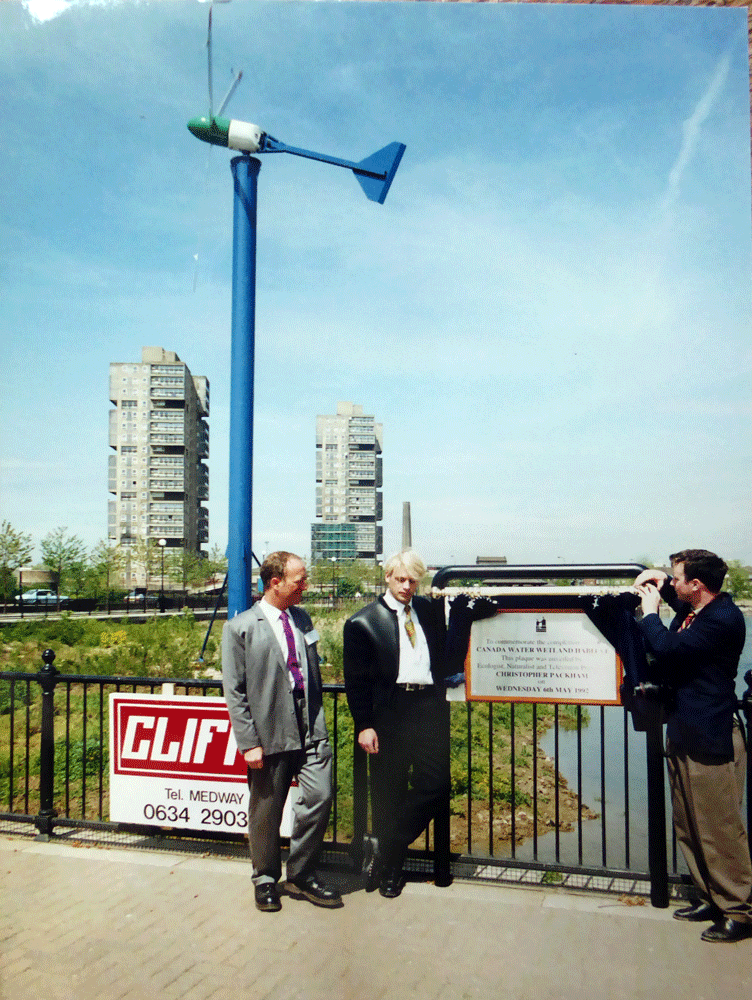
It was a great treat for me when Chris Packham agreed to inaugurate the new windmill.
 FraserBorwick